As with triangles and rectangles, we can attempt to derive formulas for the area and "perimeter" of a circle. Calculating the circumference of a circle is not as easy as calculating the perimeter of a rectangle or triangle, however. The circumference of a circle of radius $r$ is $2\pi r$. This well known formula is taken up here from the point of view of similarity. It is important to note in this task that the definition of $\pi$ already involves the circumference of a circle, a particular circle.
In order to show that the ratio of circumference to diameter does not depend on the size of the circle, a similarity argument is required. Two different approaches are provided, one using the fact that all circles are similar and a second using similar triangles. This former approach is simpler but the latter has the advantage of leading into an argument for calculating the area of a circle.
This first argument is an example of MP7, Look For and Make Use of Structure. The key to this argument is identifying that all circles are similar and then applying the meaning of similarity to the circumference. The second argument exemplifies MP8, Look For and Express Regularity in Repeated Reasoning.
Here the key is to compare the circle to a more familiar shape, the triangle. The first solution requires a general understanding of similarity of shapes while the second requires knowledge of similarity specific to triangles. The perimeter and area of triangles, quadrilaterals , circles, arcs, sectors and composite shapes can all be calculated using relevant formulae. Radius formula is simply derived by halving the diameter of the circle. When we connect a point on the circumference of a circle to the exact centre, then the line segment made is called the radius of the ring.

The distance between the center of the circle to its circumference is the radius. The diameter is always double the radius. Hence, the formula is derived by dividing the diameter by 2. The radius of the sphere is the segment from the center to any point on the boundary of the sphere.

It is a determining factor while drawing a sphere as its size depends on its radius. Like a circle, there can be infinite radii drawn inside a sphere and all those radii will be equal in length. To calculate the sphere's volume and surface area, we need to know its radius. And we can easily calculate the radius of the sphere from its volume and surface area formulas. We'll teach you the key circumference formulas you need to figure out the circumference of a circle when you know either the diameter or radius.
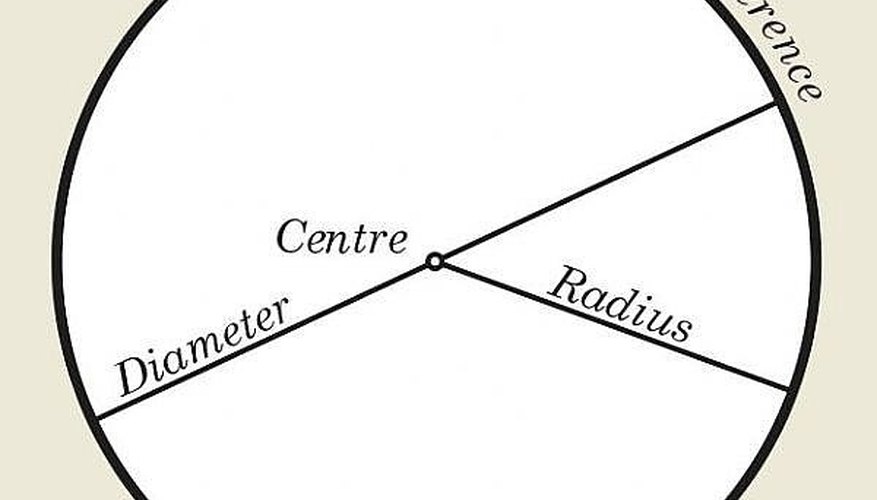
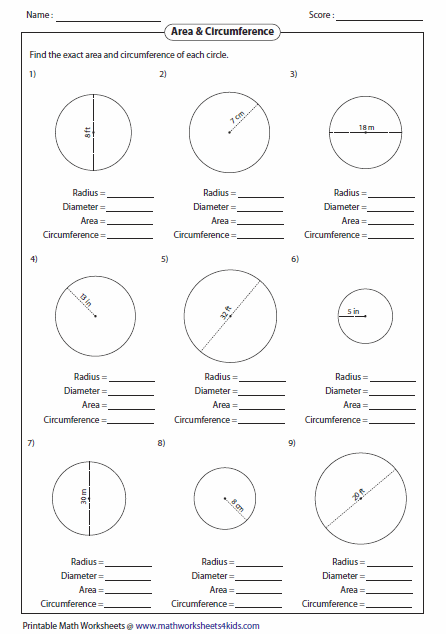
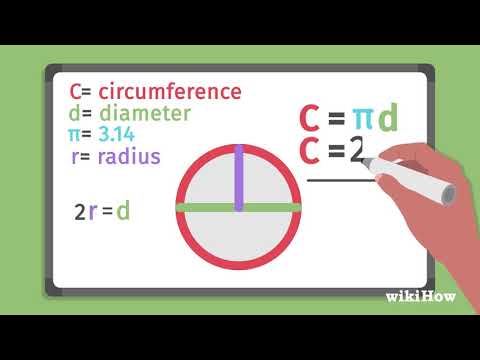
In geometry, the radius is defined as a line segment joining the center of the circle or a sphere to its circumference or boundary. It is an important part of circles and spheres which is generally abbreviated as 'r'. The plural of radius is "radii" which is used when we talk about more than one radius at a time. It can be expressed as d/2, where 'd' is the diameter of the circle or sphere. Look at the image of a circle given below showing the relationship between radius and diameter. The radius, the diameter, and the circumference are the three defining aspects of every circle.
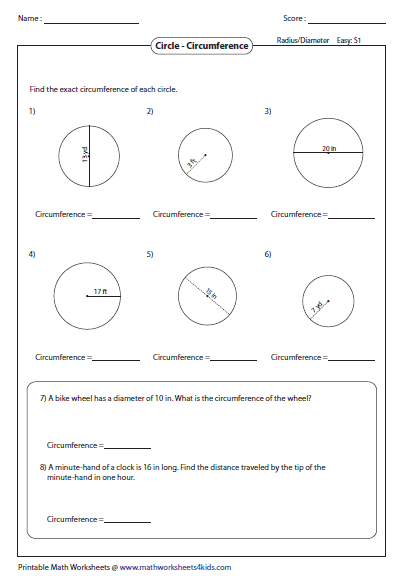
Given the radius or diameter and pi you can calculate the circumference. The diameter is the distance from one side of the circle to the other at its widest points. The diameter will always pass through the center of the circle. You can also think of the radius as the distance between the center of the circle and its edge. Once again in this example, we're given the radius of the circle. Although it's not a clean number like our previous example, but we can still simply plug the number directly into the formula like what we did above.
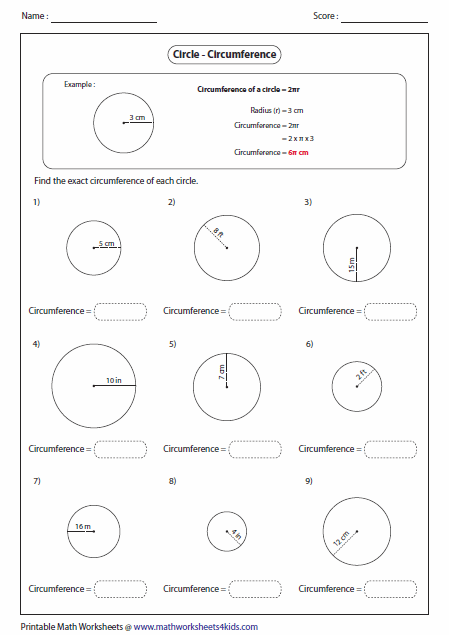
Be aware of the units that this circle's radius is given in and remember to give your final answer in the same unit. In this question, we find that the circumference is equalled to 53.41m. Radius is defined as a line segment joining the center to the boundary of a circle or a sphere. The length of the radius remains the same from the center to any point on the circumference of the circle or sphere. It is half of the length of the diameter. Let us learn more about radius in this article.

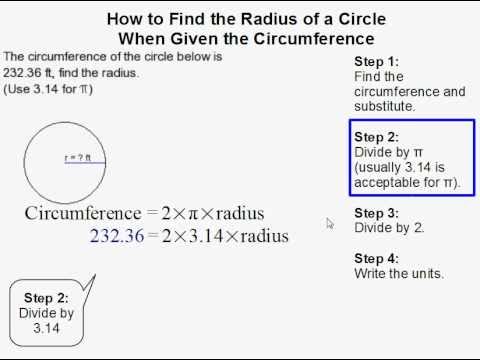
To calculate the radius of a circle by using the circumference, take the circumference of the circle and divide it by 2 times π. For a circle with a circumference of 15, you would divide 15 by 2 times 3.14 and round the decimal point to your answer of approximately 2.39. Be sure to include the units in your answer.

Thus, a circle is simply the set of all points equidistant from a center point . The distance r from the center of the circle to the circle itself is called the radius; twice the radius is called the diameter. The radius and diameter are illustrated below. Π is simply a ratio between the diameter, d of a circle and it's circumference.
In other words, a circle that has a diameter of 1 or a radius of 1/2 will have a circumference of π. Π is conveniently also the ratio of r squared to the area of the circle, meaning that a circle with radius 1 will have an area of π. Let's take a look at some of your questions. Lauren is planning her trip to London, and she wants to take a ride on the famous ferris wheel called the London Eye.
While researching facts about the giant ferris wheel, she learns that the radius of the circle measures approximately 68 meters. What is the approximate circumference of the ferris wheel? Technically you can't "calculate" the radius in such a situation. However, it is possible, by construction, to locate the center of such a circle, and then, simply by physically measuring, determine the radius. To do the construction, draw any two chords and construct their perpendicular bisectors; their point of intersection is the center of the circle.
Then draw in any radius and measure it with a ruler. The circumference of the circular water pit is 18 feet. How can Marcus use this information to determine how long the beam needs to be to go across the center of the pit? Marcus needs to figure out the diameter of the pit. Suppose you know that the circumference of a circle is 20 centimeters and you want to calculate the radius. Just plug the value for the circumference into the equation and solve.

Remember that pi is approximately equal to 3.14. Simply enter the desired value in the relevant box. Please use only numbers (e.g. enter 22 not 22 cm). If you try to enter a unit of measure (e.g. 22 metres, 4 miles, 10 cm) you will get an NAN error appear in each box.
When you have entered the number that you know, click the button on the right of that box to calculate all the other values. For example, if you know the volume of a sphere enter the value into the bottom box and then click the calculate button at bottom right. Is made up of a large number of concentric circular pieces of very thin string. Fizzywoz - If you look at examples #1-#4 at the end of the article you can see how numbers are plugged into the equation. Let me know if you have any other questions. It looks like you calculated the area of a circle using a radius of 2; in this figure, the radius of each circle is 1.
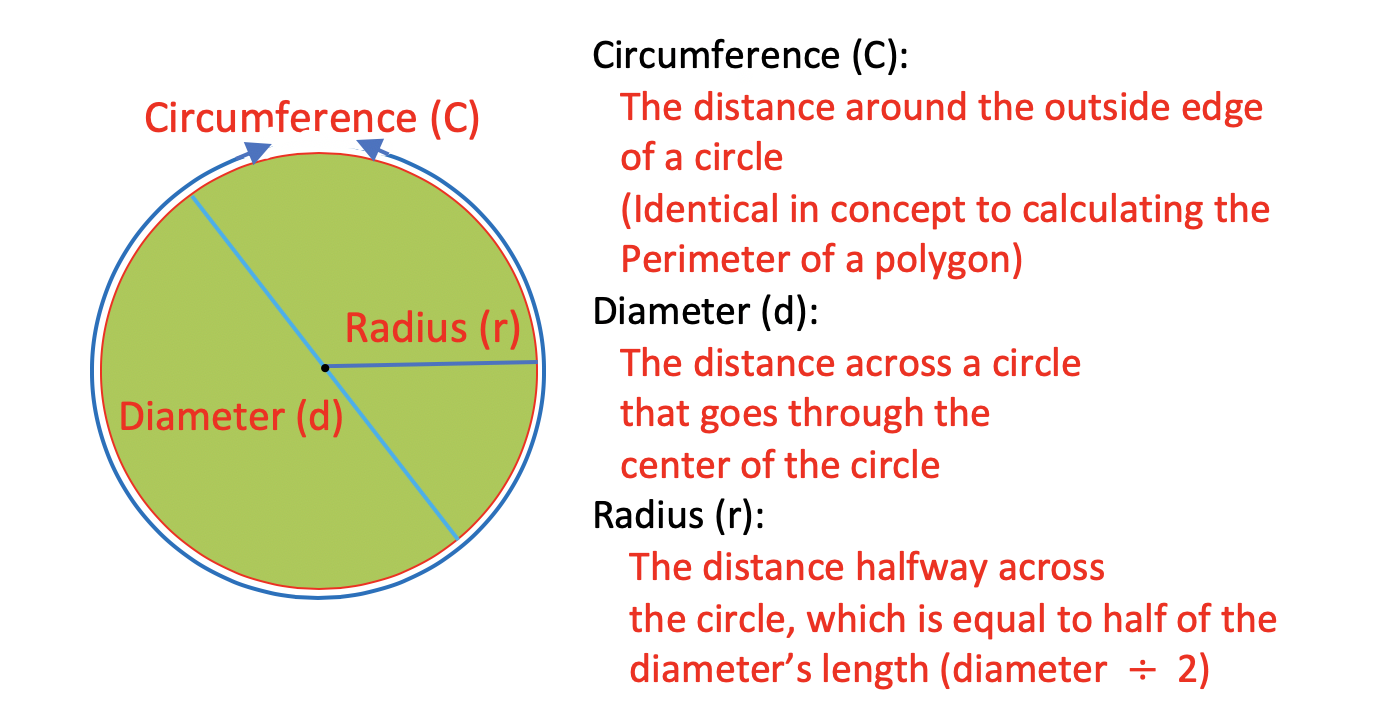
To find the area of the figure, imagine the two semi-circles are put together to create one circle. Then calculate the area of the circle and add it to the area of the square. A circle represents a set of points, all of which are the same distance away from a fixed, middle point. The distance from the center of the circle to any point on the circle is called the radius. The distance around a rectangle or a square is as you might remember called the perimeter. The distance around a circle on the other hand is called the circumference .
Use our free online radius of sphere calculator to calculate the radius with the given volume, surface area, or diameter of a sphere. The radius of a circle and sphere can be calculated using some specific formulas that you are going to learn in this section. Here, we will talk about radius formulas for a circle. The radius of a sphere formula is discussed in the section below. This will result in standard form, from which we can read the circle's center and radius.
The first step is to approximate the area of a circle using a regular polygon. We inscribe a regular polygon in the circle and split up the polygon into congruent isosceles triangles as shown below. Knowledge of area and perimeter of squares, rectangles, triangles and composite figures. The circle above displays circumference and diameter. The circumference of the circle is the distance around the edge of the whole circle. The diameter of the circle is the length from one end of the circle to the other, passing through the center of the circle.
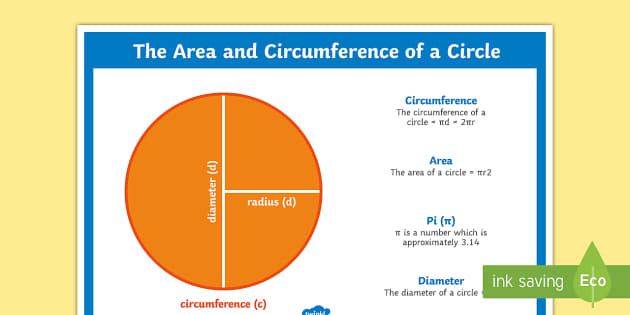
Because the line segment of the diameter intersects the center of a circle, diameters are always twice the length of the radius. In a circle, points lie in the boundary of a circle are at same distance from its center. Circumference of a circle can simply be evaluated using following formula. And as Math Open Reference states, the formula takes the circumference of the entire circle (2πr). It reduces it by the ratio of the degree measure of the arc angle to the degree measure of the entire circle .

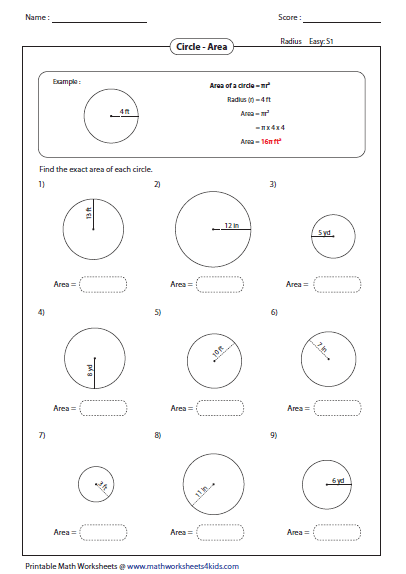
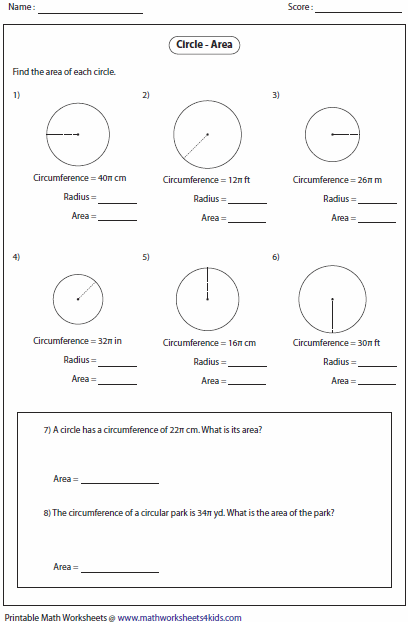
If you know the circumference, radius, or diameter of a circle, you can also find its area. Area represents the space enclosed within a circle. It's given in units of distance squared, such as cm2 or m2. Now that you know how to calculate the circumference and area of a circle, you can use this knowledge to find the perimeter and area of composite figures. You can think of it as the line that defines the shape.

For shapes made of straight edges this line is called theperimeter but for circles this defining line is called the circumference. Let us again imagine that a full pizza is divided into 8 equal sizes. Now let's rearrange the pieces in the form of a rectangle. Now the base of the rectangle is the radius and the height is the half of circumference. Because both sides together make up the circle. So height becomes πr since circumference is 2πr.

The circumference is the boundary enclosing the area within it. You can also calculate the circumference of a circle with a given radius by using algebra to isolate the C in our formula. The area of a circle is equal to pi times the radius squared.
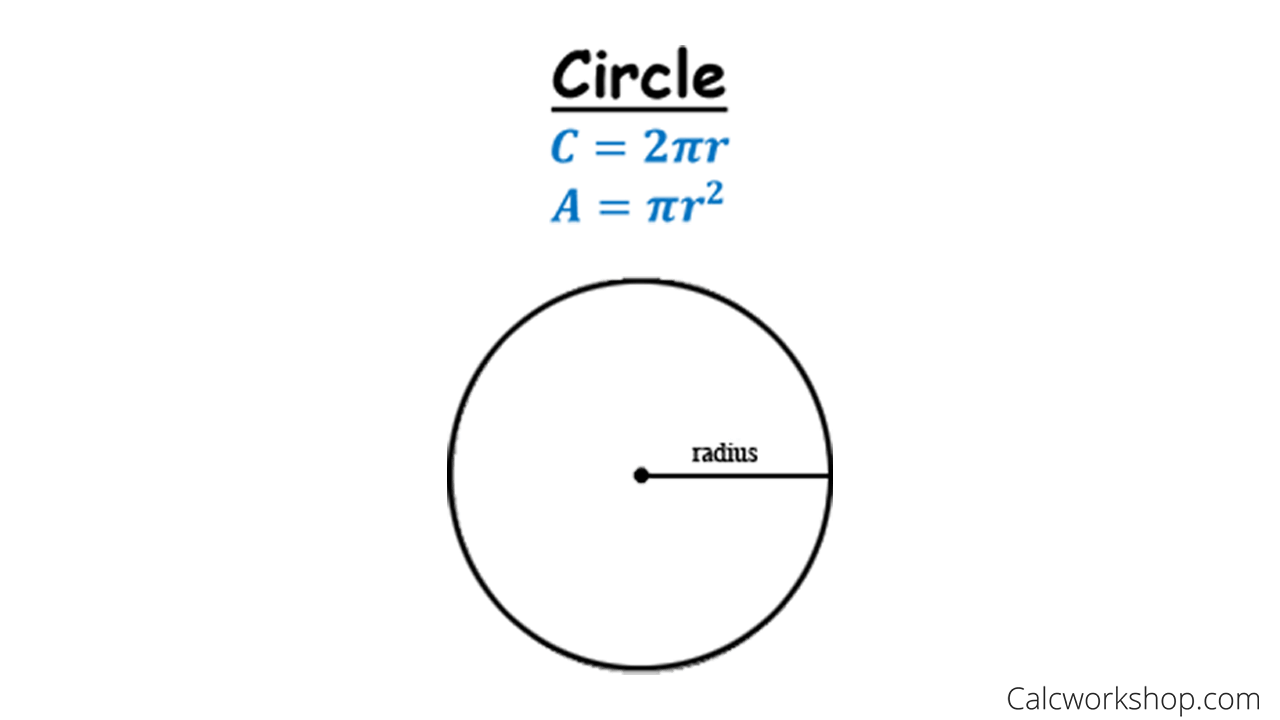
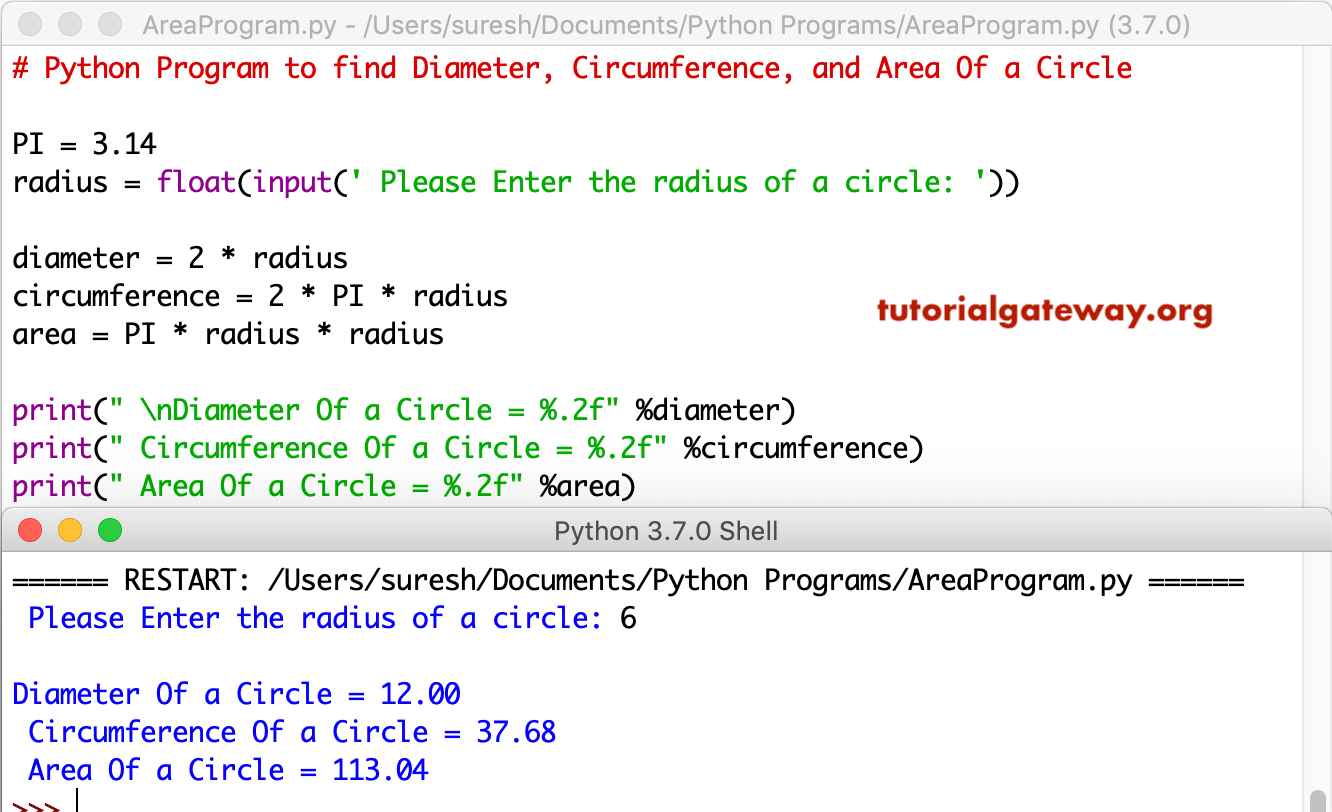
The circumference of a circle C is equal to 2 times pi times the radius r. The area of a circle A is equal to pi times the radius r squared. If a circle's circumference is known, then use the inverse of the circumference formula to solve the radius. You can refer to the below screenshot to see the output for the python program to calculate the area and perimeter of a circle using class. Here, we will see python program to calculate the area and circumference of a circle using an inbuilt math module.
The radius of a circle is the length of the line from the center to any point on its edge. The plural form is radii (pronounced "ray-dee-eye"). In the figure above, drag the orange dot around and see that the radius is always constant at any point on the circle. The formula below allows you to easily calculate the circumference of a circle when you know its radius. If you are given the radius of a circle instead of its diameter, it is easy to calculate the circumference .
Multiply the radius by 2, and then multiply by π. The formula below allows you to easily calculate the circumference of a circle when you know its diameter. For example, the length of a 180 degree arc must be half the circumference of the circle, the product of pi and the radius. The length of any arc is equal to whatever fraction of a full rotation the arc spans multiplied by the circumference of the circle. A 45 degree arc, for example, spans one-eighth of a full rotation, and is therefore equal to one-eighth the circumference of that circle. The length of an arc of n degrees equals (n/360) times the circumference.

Determine the standard form for the equation of the circle given its center and radius. Determine the center and radius given the equation of a circle in standard form. Hi - I'm Dave Bruns, and I run Exceljet with my wife, Lisa. Our goal is to help you work faster in Excel. We create short videos, and clear examples of formulas, functions, pivot tables, conditional formatting, and charts.Read more. The Excel PI function returns the value of the geometric constant π .

The value represents a half-rotation in the radian angle system. The constant appears in many formulas relating the circle, such as the area of a circle. Thus, we can calculate the circumference of a circle if we know the circle's radius .

For most calculations that require a decimal answer, estimating π as 3.14 is often sufficient. For instance, if a circle has a radius of 3 meters, then its circumference C is the following. Finding the radius of a circle requires you to use formulas such as the area or sector area of a circle formulas. You can also use the diameter and the circumference to find the missing length of a radius. The inner line segments of the sector both equal the radius of the circle. The angle that these two measurements make is called a central angle.
Where d is the diameter of the circle, r is its radius, and π is pi. The Circumference of a circle is the distance around the outside of it . The circumference is equal to π times the twice the radius or the diameter . • We know that the area of a circle is π times the radius squared or ( 3.14 x r2). Try the free Mathway calculator and problem solver below to practice various math topics. Try the given examples, or type in your own problem and check your answer with the step-by-step explanations.


No comments:
Post a Comment
Note: Only a member of this blog may post a comment.